Foodstars: Merge & Cook
- 4.6
- Rating
- 1.00M
- Installs
- Free
- Price

 Analysis by App-foxy
I spent time with Foodstars: Merge & Cook, a free puzzle game from Happibits Game that mixes ingredient merging with restaurant progression. Its central idea is easy to understand: combine food items, use the results to complete cooking-related goals, and gradually work toward a larger restaurant ambition. That familiar loop makes it approachable, but the real question is whether the free experience offers enough depth to keep the game interesting beyond its first sessions.
My short answer is that it works best as a relaxed, food-themed puzzle game for players who enjoy arranging items, planning combinations, and making small amounts of progress during spare moments. It is less suitable if you want a fast action game, a serious cooking simulation, or a completely frictionless experience with no temptation to spend. The game is rated for Everyone, runs on Android 8.0 or later, and is free to install, while optional in-app purchases range from $0.99 to $99.99 per item.
How the merge-and-cook loop feels in everyday play
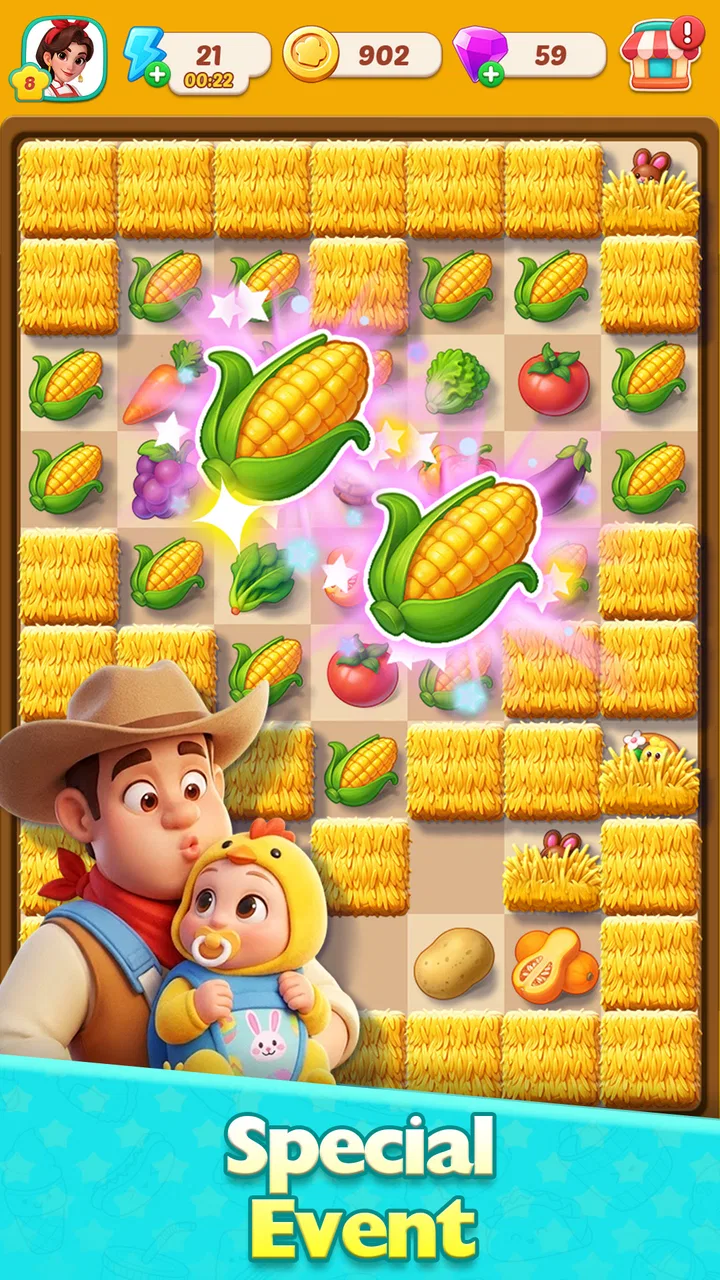
The first thing I noticed is how naturally the food theme supports the merge mechanic. Instead of treating combinations as abstract shapes or anonymous icons, the game frames progress around ingredients and cooking. That gives each small action a clearer purpose. I am not simply clearing a board; I am trying to turn basic materials into something more useful for the restaurant.
You May Also Like

 Blood Strike: 2.5 Anniversary
Blood Strike’s Loadouts Turn Every Drop Into a Tactical Gamble
A close look at Blood Strike’s custom loadouts: how fast access to signature weapons reshapes its battle royale rhythm, rewards preparation, and narrows the gap between fights.

 Pandora - Music & Podcasts
Pandora’s Music Is Easy to Start, but Harder to Recover
Pandora’s strength is its low-effort path from a seed to a station. Its weak spot is how much confidence it asks you to place in connection, setup, and quiet recovery.

 8 Ball Pool
 Is Built on Rivalries, Rematches, and Routine
A close look at the rivalries, rematches, shared routines, and unanswered safety questions that turn a quick pool match into a persistent mobile community.

 Samsung Music
’s Quiet Strength Is Playing What You Already Own
Its reach comes less from spectacle than from dependable access to a personal library. That simplicity is both the app’s strongest retention engine and its ceiling.

 AccuWeather: Weather Radar
AccuWeather Review: A Quick, Clear Forecast for Everyday Decisions
For everyday plans, the best forecast is the one you can understand quickly. AccuWeather makes rain timing, radar, and local conditions easy to act on, with a few trade-offs.

 Hill Climb Racing
Why Hill Climb Racing Still Turns Crashes Into One More Run
A tiny car, a bumpy hill and one more upgrade: Hill Climb Racing keeps resurfacing because its simple chaos makes every near-miss feel personal.
More From Our News Desk



The most satisfying moments come from preparing the board before making a combination. It is tempting to merge items immediately, especially when a new piece appears in an open space. I found better results by checking which ingredients were already close to forming a higher-level item and which spaces needed to remain available. That small pause changes the game from simple tapping into light resource planning.
This is an important distinction from a basic match puzzle. Traditional match-three games usually reward quick pattern recognition and chain reactions. Foodstars is more deliberate. The player has to think about placement, future combinations, and whether using one item now will make the next objective harder. The pace is calmer, which makes it a good fit for short breaks, but it may feel slow to anyone who prefers constant movement.
In a realistic everyday scenario, I could see playing it while waiting for an appointment or taking a short break from work. A few careful merges can feel complete without requiring a long uninterrupted session. The restaurant theme also makes the progress easier to remember than a sequence of disconnected puzzle boards. I generally knew what I was working toward, even when the individual action was small.
Why planning matters more than speed
One useful habit is to treat empty space as a resource rather than wasted room. Early in a session, I used to fill available positions too quickly and then had trouble placing the ingredients needed for the next combination. Leaving a couple of spaces open gives the board room to breathe and reduces the chance of being forced into an inefficient merge.
A second helpful approach is to avoid chasing every immediately available combination. If two items can be merged now but one of them may be more useful for a nearby objective, waiting can be the better choice. This is not a complicated strategy system, but it gives the puzzle a layer of judgment that is easy to miss when playing quickly.
I also recommend checking the broader goal before spending valuable items. The most obvious merge is not always the most useful one. Players who look at the requested dish, ingredient, or restaurant task first will usually make fewer unnecessary moves than players who simply combine whatever is closest.
These habits are not advertised as complicated techniques, yet they make a noticeable difference. They also explain why the game can appeal to both casual players and people who enjoy optimizing small decisions. You can play instinctively, but the game gives you reasons to slow down and think.
The restaurant theme adds direction, but not a full simulation
The restaurant setting gives the puzzle loop a sense of progression, and the idea of learning from master chefs adds a playful layer to the journey. However, I would not approach it expecting the detailed management found in a dedicated restaurant simulator. The main attraction is still the merge puzzle, with the culinary setting providing context and motivation.
That distinction matters when deciding whether to download it. If you want menus, staff scheduling, table management, or a detailed economy, this is probably not the right category of game for you. If you want food-themed objectives wrapped around a simple but occasionally thoughtful merging system, the setting does its job well.
The game’s appeal also depends on how much you enjoy gradual progression. It is not built around one dramatic challenge that ends the experience. Instead, the pleasure comes from completing one task, improving the available ingredients, and seeing the restaurant journey move forward. Players who enjoy incremental goals will find that structure comfortable. Players who need a strong narrative or frequent surprises may find it repetitive.
What the free entry point really means
The most important value detail is straightforward: the game can be installed and played without an upfront purchase. That makes it easy to test the core loop before deciding whether it deserves a place on your phone. The free entry point is particularly useful here because merge games can feel appealing in a store preview but become less enjoyable once the repeated actions begin.
Optional purchases are present, with individual items priced from $0.99 to $99.99. I would separate that fact from the value of the free game itself. A free download does not automatically mean that every part of the experience is equally generous, and a high-priced optional item does not automatically make the base game poor. The sensible approach is to treat the no-cost version as the trial and judge whether its normal pace feels enjoyable without spending.
For me, the game delivers value when I use it as a casual puzzle rather than as a race to unlock everything. The slower rhythm becomes less frustrating when I accept that progress is meant to happen in small steps. On the other hand, anyone who feels pressure to accelerate every goal may quickly start viewing the purchase options as part of the expected path rather than as optional extras.
That is the main financial trade-off. The free access lowers the risk of trying it, but the presence of purchases means players should decide their own boundary before playing. I would not spend simply because a task feels temporarily slow. I would first see whether the basic loop remains enjoyable at its normal pace.
Where the game feels strongest
The strongest part of Foodstars is the connection between theme and action. Merging ingredients makes more sense in a restaurant setting than many generic merge objects would, and the cooking direction gives the board a reason to exist. That makes the game more memorable than a puzzle with no clear identity.
It is also easy to understand. I did not need a long explanation to grasp the basic action, yet the board still rewarded better planning after the initial learning period. That combination is valuable for a game intended for a broad audience, especially since the content rating is Everyone.
The game is also a good companion for fragmented time. I could stop after a small objective without feeling that I had abandoned a complicated campaign. This makes it more practical than games that demand long battles or uninterrupted story chapters. It suits commuting breaks, waiting rooms, and quiet evenings when I want something interactive but not intense.
Another strength is the way small mistakes teach you to change your method. When I crowded the board or merged without checking the objective, the result was usually a less comfortable next step. That feedback encouraged better planning without requiring a formal tutorial about advanced tactics.
Where the trade-offs become noticeable
The same gradual structure that makes the game relaxing can also make it feel repetitive. If you already know that you dislike merge loops, a food theme may not be enough to change your mind. The restaurant goal gives the actions context, but the repeated process remains central.
There is also a potential tension between patience and spending. Because optional purchases are available, players who dislike waiting or slow progression may feel that the game is nudging them toward acceleration. I cannot call that a flaw in every player’s experience, but it is a genuine consideration when evaluating a free-to-play puzzle.
The game may also disappoint players looking for deep cooking decisions. The title suggests food preparation, yet the experience is best understood as a merge puzzle with culinary presentation rather than a realistic kitchen simulator. That is not a problem if your expectations are set correctly, but it is an important boundary.
I would also skip it if you want competitive multiplayer, reflex-based challenges, or a tightly written story. Nothing about the core concept suggests that those are the reasons to choose it. Its appeal comes from personal progress, organization, and the satisfaction of building better items from simpler ones.
Who is likely to get the most value
I would recommend it to casual puzzle players who like food themes and enjoy improving their decisions over time. It is especially suitable for someone who wants a game that can be played in short sessions without demanding constant concentration. The Everyone rating also makes it a broadly accessible choice for players looking for a gentle, non-action experience.
It is a good match for people who enjoy organizing a crowded board, spotting future combinations, and accepting gradual rewards. If you like the feeling of turning several modest resources into one more valuable result, the merge system should feel intuitive. The restaurant direction adds enough personality to make those small upgrades feel connected.
I would be more cautious about recommending it to players who are highly sensitive to in-app purchases. Even though the game is free to start, the purchase range reaches from small optional items to much larger ones. Anyone who prefers a single upfront price and a fully predictable cost would probably be happier with a paid puzzle game that avoids this model.
It is also not my first choice for someone seeking a serious restaurant-management experience. A dedicated management game would be better for players who want control over staffing, menus, finances, and customer flow. Foodstars is better viewed as a puzzle game that uses restaurant growth as its motivating frame.
Practical details before installing
Happibits Game is the developer behind the title. The current version is 1.47.0, and the game requires Android 8.0 or later. On the platform, it has a 4.6 average from around 15 thousand ratings, with more than 1 million installs, so it has clearly attracted a substantial audience for this style of casual puzzle.
Those figures are useful context, but they should not replace personal testing. A large audience does not guarantee that the pace will suit you, and a strong average rating cannot remove the basic trade-offs of a merge game. The free installation is the best way to find out whether the board management feels satisfying or repetitive on your own device.
I would begin without making a purchase and pay attention to three things: whether I enjoy planning instead of rushing, whether the restaurant goals give enough motivation, and whether the normal progression feels comfortable. If all three answers are positive, the free version is already offering meaningful entertainment. If the game only becomes enjoyable when progress is accelerated, that is a sign to reconsider its value for your playing habits.
My buy-or-skip verdict
My verdict is to try it for free, but keep your expectations focused on the puzzle rather than on restaurant simulation. Foodstars delivers a friendly ingredient-merging loop with a clear theme, accessible controls, and enough planning to make routine actions more interesting. I enjoyed it most when I treated each session as a small organizational challenge instead of trying to rush toward the next milestone.
The free access is the strongest reason to test it, while the optional purchase range is the main reason to set a spending limit before you begin. Players who like relaxed merge puzzles should find enough here to justify the download. Players who want deep cooking management, fast action, or a one-time paid experience should skip it and choose a game designed around those priorities.
For a friend asking me directly, I would say this: install it if the idea of building food combinations and gradually expanding a restaurant sounds enjoyable, especially if you like short, thoughtful sessions. Play patiently, protect open board space, and check objectives before merging. If that style of progress feels rewarding without needing purchases, Foodstars offers good free entertainment. If it feels like busywork after the novelty fades, no amount of restaurant decoration will make it the right puzzle game for you.
FAQs for Foodstars: Merge & Cook
01What is Foodstars: Merge & Cook, and how does the gameplay work?
Foodstars: Merge & Cook is a casual cooking and puzzle game built around merge mechanics. You combine matching ingredients or cooking items to create upgraded objects, then use them to prepare dishes and complete customer orders. As you progress, new recipes, kitchen tools, characters, and areas become available. The game is easy to understand, but later levels may require more careful planning and resource management.
02Can Foodstars: Merge & Cook be played offline?
Some parts of Foodstars: Merge & Cook may remain accessible without an internet connection, particularly basic merging and previously loaded gameplay content. However, an online connection may be required for advertisements, cloud synchronization, special events, updates, purchases, and certain rewards. If you plan to play while traveling, it is best to open the game online first and check which features are available before disconnecting.
03Is Foodstars: Merge & Cook free to download and play?
Foodstars: Merge & Cook can generally be downloaded and played for free, but it may include optional in-app purchases. These purchases can provide extra energy, coins, boosters, or other progress-related benefits. Advertisements may also appear during gameplay, sometimes with the option to watch a video in exchange for a reward. You can usually enjoy the main experience without paying, although progress may take longer.
04Does Foodstars: Merge & Cook require a powerful Android or iPhone?
Foodstars: Merge & Cook is designed as a casual mobile game, so it should run comfortably on many modern Android phones and iPhones. Performance can still vary depending on your device’s operating system, available storage, memory, and background applications. Older devices may experience slower loading, reduced responsiveness, or crashes. Before installing, check the current store listing for supported system versions and storage requirements.
05Is Foodstars: Merge & Cook suitable for children?
Foodstars: Merge & Cook uses colorful visuals and straightforward cooking puzzles, making it approachable for younger players. Nevertheless, parents should review the game’s age rating and privacy information because it may contain advertisements, optional purchases, and online features. If children use the game, enabling parental controls and restricting in-app purchases is recommended. The game’s suitability can also depend on how much screen time is allowed.
Pros
- Relaxing merge gameplay that is easy to learn and play casually.
- Cooking-themed progression gives each level a clear sense of purpose.
- Short sessions work well for playing during quick breaks.
- Colorful visuals and friendly characters make the game appealing.
- New recipes and restaurant goals help keep progression engaging.
Cons
- Energy limits can interrupt play when you want longer sessions.
- Some upgrades may require patience or repeated merging.
- Later stages can feel slower without spending premium currency.
- The gameplay may become repetitive for players seeking more variety.
- Ads or optional purchases can affect the pace of progression.

Foodstars: Merge & Cook
Gallery